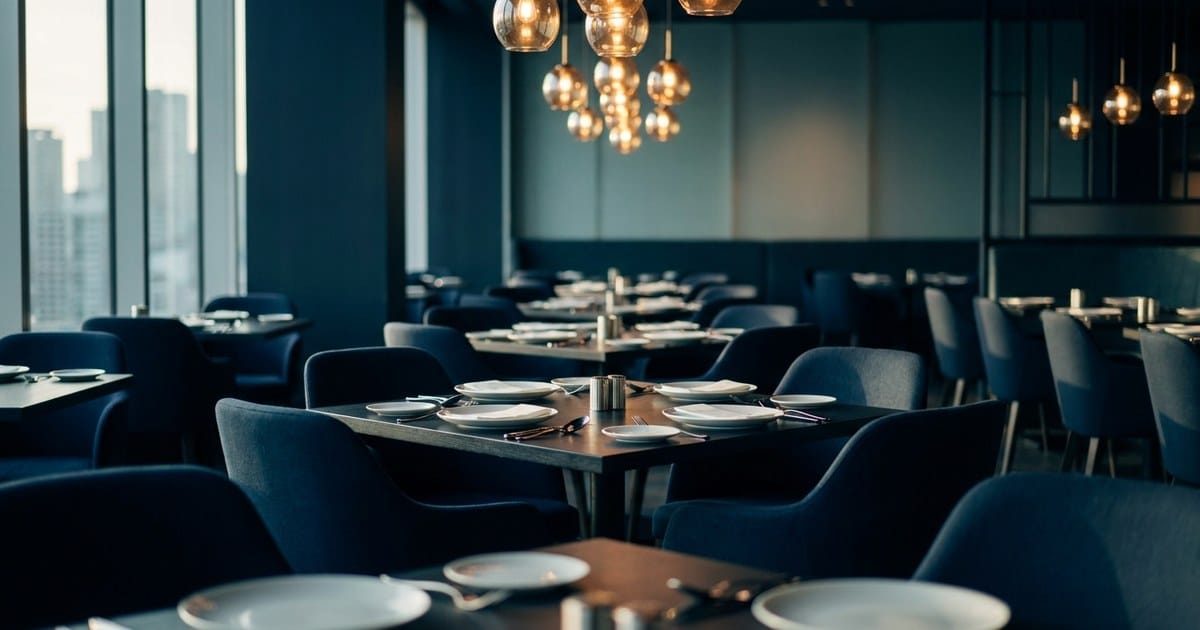
Food and beverage is The Funding Assembly's core sector — and selling an F&B business is unlike selling any other SME. Margins are thin, value often sits in a lease, a licence, a brand or a set of recipes, and buyers scrutinise food-safety compliance as hard as the financials. This guide is the strategic overview: how F&B businesses are valued in Southeast Asia, how to maximise your value before a sale, the trends moving prices, and the deal-specific risks to manage. For an indicative number, start with our valuation calculator.
Why is F&B M&A different from other sectors?
Because the value drivers are unusually specific. A food business lives or dies on its location and lease, its licences (Singapore Food Agency, JTC, NEA), the brand and customer loyalty it has built, and often the founder's recipes or relationships. Margins are tight and sensitive to food and labour costs, and many outlets depend heavily on the owner being present. Buyers know all this, so they price F&B deals on factors a generic valuation ignores — which is exactly why preparation moves the number so much.
How are F&B businesses valued in Southeast Asia?
Most SME F&B deals are valued on an EBITDA multiple, with the multiple varying widely by sub-sector and, crucially, by whether the business is a single outlet or an established multi-outlet group. The ranges below reflect Southeast Asian private-deal reality — they are lower than the US or public-company figures you'll see quoted elsewhere.
| F&B segment | Typical SEA EBITDA multiple | What moves it |
|---|---|---|
| Single-outlet café / restaurant | 2.0–3.5× | Location and lease security, owner-dependence, consistency of margins |
| Multi-outlet / established group | 4.0–5.0× | Brand strength, documented systems, management depth that runs without the founder |
| Food manufacturing / production | 3.5–5.5× | Capacity, contract stability, product margins, capital intensity |
| Food distribution / logistics | 4.0–6.0× | Network reach, supply-chain resilience, scalability |
Other methods come into play depending on the business: discounted cash flow for capital-intensive manufacturers, comparable-company and precedent-transaction analysis for consumer-facing brands, and asset-based valuation for asset-heavy processing or distribution. A strong, scalable consumer brand can command more than these ranges. For the full breakdown and worked examples, see business valuation multiples in Singapore and how to value a business in Singapore.
How do I maximise my F&B business's value before selling?
Buyers aren't only buying today's profit — they're buying future potential and a low-risk transition. Five levers move your sale value most:
| Lever | What to do |
|---|---|
| Financial transparency | Keep clean monthly records; show consistent profit margins, efficient cost of goods sold (COGS), and steady year-on-year revenue growth. |
| Brand reputation | Maintain an active social presence, respond to reviews, and document awards, media and history — buyers pay for an established customer base. |
| Operational efficiency | Document SOPs and workflows; modern POS, CRM and inventory systems; identify key staff so a buyer can take over smoothly. |
| Growth potential | Show a credible roadmap — new outlets, franchising, new products, margin improvements — so buyers value the upside. |
| Risk management | Diversify away from single-customer reliance, keep strict SFA/NEA food-safety compliance, and resolve legal or manpower issues before listing. |
The financial lever is the biggest of all and has its own playbook: financial preparation for selling your business. More broadly, the same qualities that lift value are what makes a business attractive to buyers.
What trends are shaping F&B valuations?
Beyond the financials, several sector trends are actively moving multiples in Southeast Asia:
- Health-centric products. Rising demand for healthier options — alternative proteins, low-sugar beverages — earns premium valuations for brands positioned ahead of the curve.
- Sustainability and ESG. Eco-friendly packaging and sustainable sourcing increasingly attract both consumers and acquirers, lifting the value of aligned brands.
- Technology and AI in the supply chain. Outlets and producers that use technology for efficiency and consistency command stronger multiples because they're easier to scale.
- Cross-border M&A and APAC growth. Acquirers continue to seek geographic diversification, and APAC's stronger unit-sales growth makes Southeast Asian F&B businesses attractive targets.
- Cost pressure. With raw-material and wage inflation squeezing margins, businesses with genuine pricing power and tight cost control are valued as more resilient.
For the sector-trends detail, see how industry trends shape F&B valuations.
What deal structures and risks are specific to F&B?
Most F&B sales are structured as either an asset purchase (the buyer takes selected assets — equipment, brand, lease, inventory — often cleaner on liabilities) or a share purchase (the buyer takes the company whole, including its contracts and history). Which suits you depends on liabilities, lease terms and tax. The risks that most often stall F&B deals are sector-specific: lease and licence transferability (landlord and SFA/JTC consent can gate completion), supply-chain and key-supplier continuity, food-safety and regulatory compliance, and owner- or chef-dependence. Identify and resolve these before you go to market — they are the classic late-stage deal-breakers in food and beverage. The fuller picture of sector obstacles is in why M&A is challenging in the food industry, and buyers' diligence expectations in our F&B due-diligence guide.
Frequently asked questions
What multiple does an F&B business sell for in Singapore?
For SEA SME deals, a single-outlet café or restaurant typically trades at about 2.0–3.5× EBITDA, an established multi-outlet group at 4.0–5.0×, food manufacturing at 3.5–5.5×, and distribution at 4.0–6.0×. These private-deal ranges are lower than the US or public-company figures often quoted; brand strength, lease security and owner-independence push you toward the top of the range.
What makes an F&B business more valuable to a buyer?
Clean financials with healthy margins, a strong recognisable brand, documented operations that run without the owner, a credible growth roadmap (new outlets, franchising, products), and tight food-safety compliance. Each one removes a risk a buyer would otherwise price into a lower offer.
How do I sell my F&B business confidentially?
Run a structured, confidential process: release information only as buyers qualify, protect staff and supplier relationships until the right moment, and work with an advisor who can pre-screen buyers. The full process is covered in our guide to how to sell a business in Singapore.
Thinking of selling your F&B business? The Funding Assembly specialises in food and beverage M&A across Southeast Asia — valuing your business, preparing it for a premium sale, and running a confidential, competitive process with zero upfront fees. Talk to us, or start with the valuation calculator.